How to Find Local Web Design Clients: A Systematic Approach
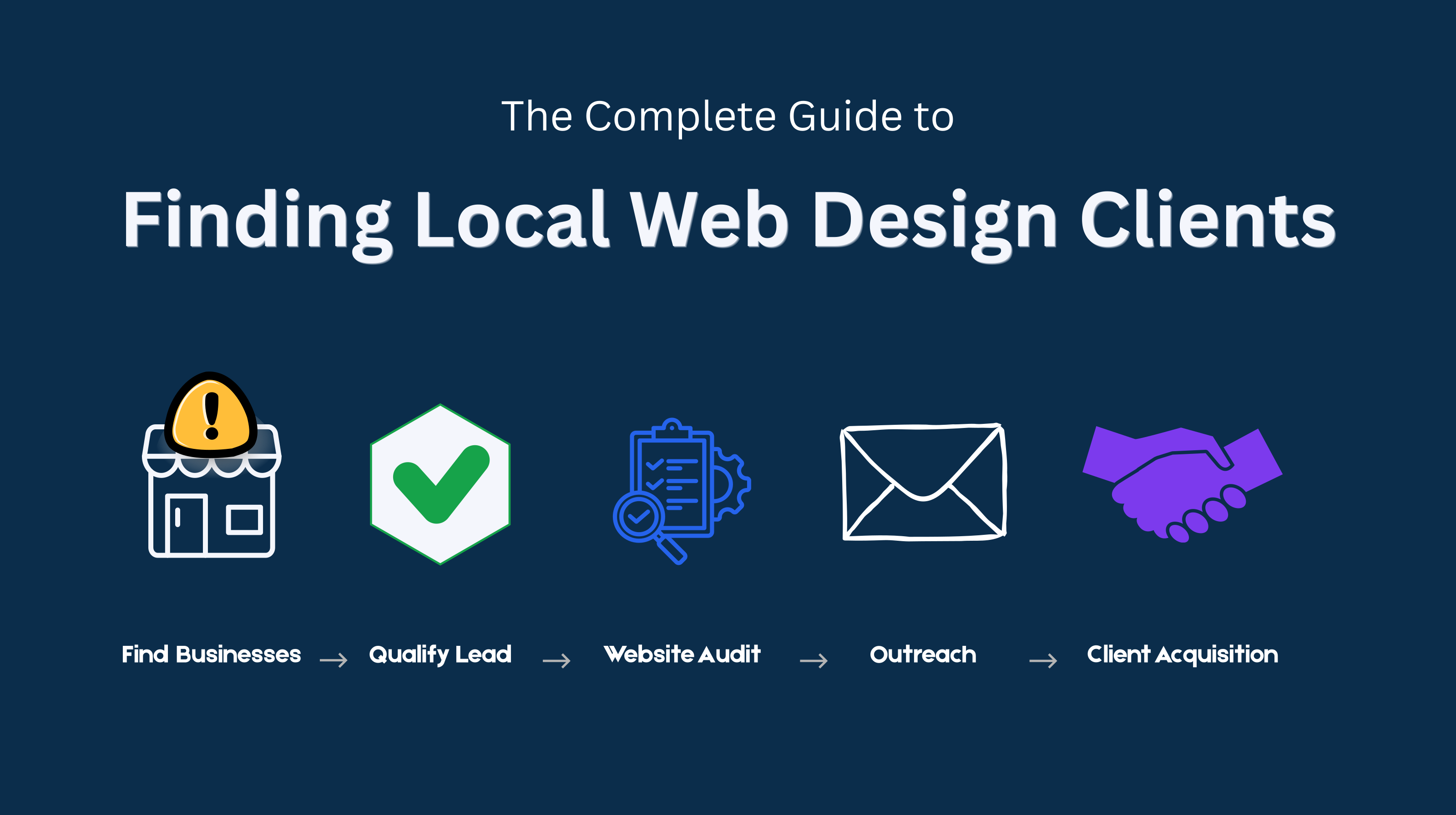
The Freelance Web Developer's Referral Trap
It's Tuesday afternoon, and you're staring at your email, waiting for new leads to appear.
The requests for proposals?
None.
The discovery calls?
Sparse.
You hit refresh, hoping to see a notification for a new referral.
But nothing changes.
This isn't a one-time occurrence. It's the norm.
You're at your workspace, surrounded by the tools of your trade. Yet, the most essential element needed to fuel your freelance web development business—a steady stream of clients—remains elusive.
Frustration mounts.
It's a lead cycle that feels endless.
There's that brief moment of joy when a project lands in your lap. A previous client sends someone your way, and it feels like validation. But as the project wraps, so does the influx of work.
Each day without new leads means another step towards a dry pipeline.
Your day is now consumed by refreshing pages, checking social media, or messaging your network in search of those all-important referrals. It takes time—time you could spend on actual web development.
The real issue?
Referral dependency stagnates growth.
The cycle is familiar:
A flurry of activity when a referral comes through, followed by a slow decline in leads once you've finished that project.
There's an alternative—a way to achieve consistent client acquisition without waiting for the next referral to hit your inbox.
Imagine not having to depend on someone else's word to get your foot in the door. Rather than being at the whim of referrals, a system exists that can efficiently generate freelance web design leads, locally and reliably.
Breaking free from this referral trap isn't just wishful thinking. It's a reality for those who've embraced new methods.
You don't have to keep feeling stuck in a relentless cycle.
It's time to explore a method where outbound web design clients become the norm rather than the exception.
A repeatable system can tilt the scales from uncertainty to predictability, allowing you to focus on what truly matters—growing your freelance business with confidence.
Why Your Referral Dependency Holds You Back
Most developers rely on:
- Referrals
- One-off outreach
- “I’ll figure it out when I need work”
That’s not a system. That’s hope with better branding.
The result is always the same loop:
Finish a project → relax → pipeline dries up → panic → scramble
This guide breaks that cycle.
But these tactics aren't just inconvenient; they're holding you back in substantial ways.
Time Lost: Endless hours spent chasing leads that go nowhere.
Revenue Gap: Empty slots on your schedule equate to lost income.
Mental Toll: The anxiety of inconsistent work leaves you constantly on edge, wondering if and when the next project will appear.
And it doesn't stop there. Relying on referrals translates into a lack of control over your business. You can't predict when a referral might come through.
This means you're always on someone else's timeline, not your own.
That's not sustainable.
Without a proactive system in place, you find yourself stuck in a reactive cycle. What might have seemed like an easy way to get web design clients has turned into a risky gamble on your financial stability.
Even industry statistics echo this sentiment. Over-reliance on referrals can severely limit freelance growth potential. Experts caution against the pitfalls of referral dependency, warning that this approach leads to long-term business stagnation and vulnerability.
If your current approach depends heavily on unpredictable referrals, your ability to build a sustainable client base is at risk.
Referral Dependency vs. Outbound Lead Generation
| Referral Dependency | Outbound Lead Generation | |
|---|---|---|
| Predictability | ✗ | ✓ |
| Control Over Leads | ✗ | ✓ |
| Revenue Stability | ✗ | ✓ |
| Mental Toll | ✓ | ✗ |
Fluctuating lead sources mean income that can't be relied upon.
The struggle to find web design clients without referrals becomes more apparent, as unpredictability becomes your norm.
By clinging to referrals, you've unknowingly limited your opportunities for growth and stability. The lack of a structured approach could even mean missing out on high-quality leads—ones that could become your long-term clients.
Your current strategy isn't enough to maintain steady business growth. Realizing this is the first step toward change.
It's time to recognize the need for an outbound web design client strategy that provides reliable and consistent leads.
The stakes are high, but acknowledging the issue means you're ready to take the initiative.
Referral dependency stagnates growth.
The Invisible Barrier to Consistent Leads
Freelance web developers frequently overlook a subtle but crucial issue.
They mistake shortfalls in lead consistency for a problem with their referral sources. The apparent conclusion? Increase networking, chase more referrals, and wait a few months.
Yet, the real obstacle lies somewhere else.
The root cause? A lack of a proactive, repeatable outreach system.
By relying heavily on referrals, developers become passive participants in their own business growth. This approach perpetuates reactive client acquisition, where developers respond to whatever leads come their way, rather than generating leads intentionally.
That's the pattern.
Here's why it occurs: when you depend on referrals, you're left exposed to their inherent unpredictability.
While referrals tend to be high-quality, they lack frequency and volume. This scarcity places developers in a reactive stance, scrambling for control rather than seizing it.
The consequence of this approach is evident.
When developers receive zero referrals in a month, their pipeline dries up, and with it, both revenue and morale. Research indicates that 37.1% of marketers cite generating high-quality leads consistently as their primary challenge.
This inconsistency results in sporadic income, further embedding reliance on referrals as the safest bet.
The real challenge isn't about work ethic or skills. It's about structure. Without a system to generate local web design leads consistently, developers float aimlessly, never breaking free from unpredictability.
So, what's the key takeaway here?
A repeatable, systematic approach to outbound lead generation opens new opportunities.
Once this method is in place, it shifts the cycle from random chance to predictable results. This is not about dismissing referrals but about supplementing them. Moving from referral dependency to a structured process not only stabilizes cash flow but also reduces the mental strain of uncertainty.
And that's the point.
By understanding this hidden cause, developers can prepare to transition into a more strategic phase of client acquisition.
It paves the path for a business model that's resilient to the ebb and flow of traditional referral networks.
The truth isn't in the leads themselves. It's in the missing lead generation system.
A repeatable, systematic approach to outbound lead generation opens new opportunities.
Introducing the Referral-Free Client Loop
Freelance web developers often see client referrals as the heart of their business. You land a big project, impress the client, then wait for the next opportunity to knock. But.
What if that door doesn't open?
Referrals are inherently unpredictable, creating a business model that can fluctuate wildly from one month to the next. So how do you stabilize your client pipeline without relying on these happenstances?
Adopting a Referral-Free Client Loop.
This is a new perspective that addresses the gap left by inconsistent referrals. Instead of passively waiting for clients, it's about actively engaging with the market every week. The focus shifts from relying on sporadic word-of-mouth to creating a repeatable system that drives leads predictably.
But why is this shift necessary?
Relying solely on referrals is risky.
You're at the mercy of external factors—client relationships, timing, and sheer luck. Suddenly, you're in a reactive zone, not knowing when the next gig will arrive. Meanwhile, a structured outbound approach allows you to take the reins. You're in control, setting the pace.
The upshot:
Your business becomes proactive rather than reactive.
With the Referral-Free Client Loop, you're not left hoping for the next recommendation. Instead, you initiate the process. This loop comprises clear, manageable steps designed to engage potential clients consistently, sharpening your business focus as you iterate weekly.
When referrals dry up, and they eventually might, you're left with gaps that strain your business. But with a repeatable system, those gaps are filled by a steady stream of leads, positioning you a step ahead of competition reliant on referral luck.
What becomes visible through this lens?
- Reliability: Your client acquisition process gets clearer, with predictable cycles.
- Control: You can steer your business, choosing whom to approach and when.
- Growth: With consistent outreach, client diversity and opportunities expand.
Freelance web developers who embrace this new lens discover that true business freedom doesn't come from chasing referrals but from cultivating a self-sustaining lead ecosystem.
It's more than changing tactics—it's a shift in mindset that sets the stage for sustainable success.
Referral Dependency vs. Referral-Free Client Loop
| Referral Dependency | Referral-Free Client Loop | |
|---|---|---|
| Client Acquisition Method | ✓ | ✗ |
| Reliability | ✗ | ✓ |
| Control Over Leads | ✗ | ✓ |
| Predictability | ✗ | ✓ |
Your business becomes proactive rather than reactive.
Mastering the Referral-Free Client Loop
Ready to break free from the reliance on referrals?
The Referral-Free Client Loop is your new playbook for finding web design clients without referrals. This system not only empowers proactive engagement but also drives a consistent flow of local web design leads.
Here's how it works:
- Range: Define your local reach. Identify the geographical area you want to target.
- Expose: Identify potential clients. Unearth businesses that fit your ideal customer profile.
- Filter: Select the right prospects. Focus on those who will benefit most from your services.
- Evidence: Craft your persuasive message. Use specific pain points and benefits.
- Reach Out: Initiate contact using personalized outreach.
- Remind: Follow up to reinforce your initial outreach.
- Attach Tracking: Monitor interactions and feedback.
- Loop Weekly: Repeat the process every week to maintain momentum.
Why does this structure excel?
Each step in the Referral-Free Client Loop builds on the previous one, ensuring that you are not merely generating a list of names but actively nurturing relationships with potential clients. This approach brings much-needed order to what can otherwise be a chaotic process.
The real magic happens when you bring intentionality and consistency into play. Using platforms like LinkedIn, where 40% of B2B marketers find it most effective for high-quality leads, you gain access to decision makers with a genuine interest in your offerings.
With Lead Segmentation, you can elevate your conversion rates by 73%, ensuring you’re aiming at the right targets every time.
But.
The key is repetition.
Adopting this cycle transforms your lead generation into a reliable routine. It's not about catching every fish in the sea but about building a network of targeted connections ready to engage with you.
With tools like Leaddly, you're equipped to discover leads, perform website audits, and manage client data seamlessly—all from one dashboard.
You gain control over your client acquisition, moving from a reactive to a proactive stance. Instead of waiting on referrals, you're crafting your destiny, sending out your message, and scoring those invaluable freelance web design leads week after week.
This changes everything.
Steps in the Referral-Free Client Loop
- Range: Define your local reach.
- Expose: Identify potential clients.
- Filter: Select the right prospects.
- Evidence: Craft your persuasive message.
- Reach Out: Initiate contact.
- Remind: Follow up.
- Attach Tracking: Monitor interactions.
- Loop Weekly: Repeat the process.
Range: Define Your Local Reach
Finding web design clients without referrals demands a clear focus on your local area. This step in the Referral-Free Client Loop is about defining the geographical scope for your outreach efforts.
Think of it as setting the stage to uncover potential clients right in your backyard.
Why it matters:
Local clients offer numerous advantages—ease of meeting, understanding of regional trends, and potentially less competition.
But first, you need to determine how wide your net should be. Here's how:
- Identify Your Key Cities: Decide which nearby cities or towns are worth targeting. Too broad, and you dilute your efforts. Too narrow, and you miss opportunities.
- Aim for a manageable list—perhaps 3 to 5 cities within a feasible travel distance.
- Research Local Business Directories: Use tools like Google Maps to see the types of businesses prevalent in each city. This is where Leaddly's Lead Discovery feature comes into play, enabling you to scan 50+ business types to spotlight those with outdated websites.
- Start with businesses that are likely to benefit from a web presence upgrade.
- Assess Existing Market Presence: If Google Analytics is your game, put it to work. It can help you figure out where your website traffic is coming from geographically.
- This insight informs which locations deserve more of your focus. Learn more about tracking local leads.
Here's where it breaks down:
Freelancers often get stuck here because they miss the nuance of balance. A tight geographical range limits opportunities. Expanding too much strains your ability to personalize.
Geographical Range Definition Process
- Identify Key Cities: Select 3 to 5 cities to target.
- Research Local Directories: Utilize tools to find prevalent businesses.
- Assess Market Presence: Use analytics to determine traffic sources.
- Define Your Range: Establish a clear list for outreach.
Success looks like this:
- A clearly defined list of target areas
- Businesses within that radius needing web design services
- A map of where you're most likely to find these leads
This geographical definition is your game plan's backbone, offering a structured approach to finding web design clients without relying on referrals.
Once your range is set, you'll be primed to dive into client discovery, filtering, and making those essential first contacts.
Ready to pivot?
You've determined your range—next, it’s about uncovering potential clients within it.
Expose: Identify Potential Clients
Finding web design clients without referrals starts with identifying potential businesses in your area that need your services. This step, "Expose," is crucial to unearthing opportunities and ensuring your lead generation efforts are fruitful.
Here's what matters:
Mapping Local Prospects
Start by focusing on local businesses you can target directly. Use Leaddly's Lead Discovery feature to scan over 50 local business types swiftly. It prioritizes businesses with missing or outdated websites, bringing potential clients right to your doorstep. Alternatives like Apollo.io or LinkedIn Sales Navigator can also be useful, but Leaddly's capability to surface prospects efficiently should be your go-to tool.
Now, let's break down the process:
- Initiate a Local Scan: Use Leaddly to perform a local search focusing on businesses within your chosen radius. Capture information on their web presence and areas needing improvement.
- Identify Website Gaps: Filter results to uncover businesses with gaps in their online presence. Look for outdated or poorly optimized websites. These are prime targets for offering your services.
- Expand to Multiple Verticals: Don't limit your search to one industry. Explore multiple verticals (like real estate, hospitality, or retail) to diversify your client base.
- Compile a Prospect List: Maintain an organized list of potential clients with insights on their current web status. This list is your foundation for outreach.
- Perform Quick Audits: Use the instant health & SEO scans by Leaddly to conduct preliminary audits on prospects. Identify key pain points like slow loads, SSL issues, or SEO deficits.
Here's where it breaks down:
A common pitfall is trying to target too broad an area or too many businesses at once. This dilutes your efforts and reduces effectiveness. Focus on a manageable number of prospects first. This ensures deep, meaningful engagements rather than shallow touches across a wide net.
The upshot:
When done well, identifying potential clients is a strategic exercise that preps the next stages of the Referral-Free Client Loop. Businesses with visible web issues don't just represent prospects—they're signals of your new, proactive opportunity set. Fine-tuning your approach here sets the stage for successful connections and future leads.
Other options include using Google Maps analytics and Crunchbase Pro for additional data points.
Identifying Potential Clients
- Initiate a Local Scan: Use Leaddly to perform a local search.
- Identify Website Gaps: Focus on businesses with outdated websites.
- Expand to Multiple Verticals: Diverse industries increase client opportunities.
- Perform Quick Audits: Conduct preliminary audits on prospects.
Filter: Select the Right Prospects
Filtering out the right prospects is the backbone of a successful outbound system. It ensures you focus your efforts on those most likely to become web design clients without referrals.
Here's how to do it efficiently:
- Analyze Local Businesses: Use Leaddly's Lead Discovery feature. It scans over 50 local business types, surfaces those with missing or outdated websites, and gives you a list primed for outreach. Alternatives like Apollo.io and LinkedIn Sales Navigator can also help.
- Prioritize By Need: Identify businesses that clearly need your services. Look for sites with issues like slow load times or poor mobile UX. According to industry data, 70% of small and medium-sized business sites suffer from technical SEO issues, an opportunity ripe for solution-driven web designers.
- Evaluate Decision-Making Potential: Not all businesses are created equal when it comes to decision-making speed. Focus on those where key stakeholders are active on platforms like LinkedIn. Studies show that LinkedIn accounts for approximately 80% of B2B social media leads, a hotbed for professional engagement.
- Segment Your Prospects: Craft buyer personas based on industry, size, and typical decision-making cycles. Resources highlight that segmentation can increase conversions by 73%, ensuring your messages resonate more deeply.
- Perform a Digital Health Check: Run a quick health scan using Leaddly to spot essential fixes needed by potential clients. Examine key factors like speed, SSL, and broken links. Tools like Screaming Frog or GTmetrix can also provide a thorough overview.
The real issue?
Not filtering prospects well enough can lead to wasted time and effort.
The upshot:
When you focus on businesses with clear needs and active decision-makers, you sharpen your outreach and increase the likelihood of conversion. This approach helps you find web design clients without referrals by ensuring that your energy and resources are directed at the right targets.
Filtering prospects effectively means leaving no stone unturned in your search for viable clients. This keeps your pipeline full and your efforts focused—all critical to successfully mastering the Referral-Free Client Loop.
Evidence: Craft Your Persuasive Message
Crafting your outreach message is the linchpin for finding web design clients without referrals. By using the Observation → Consequence → Question formula, your communication becomes not only relevant but also compelling.
Here's what matters:
You want your prospect to nod and think, "They get it."
Let's break it down into actionable steps:
- Observation: Begin by pinpointing a specific element related to their website or online presence. This shows you've done your homework. For instance, "I noticed your website takes over five seconds to load."
- Consequence: Illustrate the potential impact or missed opportunity linked to this observation. This brings an immediate, relatable urgency. "This delay might be causing visitors to leave before even exploring your offerings, directly affecting potential revenue."
- Question: End with a question that engages and encourages dialogue. Keep it open-ended to prompt a response. "Would you be open to a quick chat on how we can streamline your site's performance?"
The key to making this system work?
Customization and Context.
According to recent industry research, personalized outreach generates over 50% open rates compared to standard messages. This demonstrates how a targeted approach can make all the difference.
Here's where it breaks down:
Relying on generic templates that sound like copy-paste jobs. These won't get past the inbox gatekeepers. You need to tailor your message to address the unique aspects of each prospect's business. Leaddly's AI Outreach feature can help you personalize emails by incorporating specific audit insights directly into your proposals.
When crafting your message, blend the formula with insights from tools like Leaddly's Lead Discovery feature, which identifies businesses with neglected online presences. This combination can instantly position you as the proactive solution they’ve been waiting for.
The upshot:
Done well, your outreach message creates an irresistible case for why your expertise is precisely what they've been missing. The prospects see value before they even reply, paving the way for smoother conversations.
Consider your email's success not only in open rates but in replies received. When you consistently tailor messages using the Observation → Consequence → Question method, responses will not just trickle in—they'll flow.
Full stop.
Ultimately, refining this step in your system generates a more predictable pipeline for freelance web design leads.
Real-Life Success: The 15-Minute Lead Sprint
Martin, a freelance web developer in Denver, faced an all-too-common dilemma. Despite his talent, finding consistent web design clients without referrals felt like searching for a needle in a haystack.
Traditional methods had left him reliant on fluctuating word-of-mouth leads, an unsustainable model if he wanted to scale his business.
Enter the 15-Minute Lead Sprint.
Here's what Martin did, step by step, to set the stage for repeatable lead generation:
- Identify Prospects: Using Leaddly's Lead Discovery, Martin scanned for local businesses with outdated websites. Within seconds, he had a list prioritized by prospect potential. This eliminated hours of manual searching. (Alternatives: Apollo.io, LinkedIn Sales Navigator.)
- SEO & Health Scan: Before reaching out, Martin ran quick health audits using Leaddly's comprehensive tools, covering key SEO elements like speed, SSL, and mobile UX. These client-friendly reports set the stage for tailored outreach. Other options include Screaming Frog or GTmetrix.
- Personalized Outreach: Martin used AI-generated proposals from Leaddly to customize his emails based on each business's specific needs. This personalized approach achieved a 50% open rate—far higher than generic blasts.
Here's where it gets interesting:
Martin focused not just on prospects' website issues but also highlighted the SEO benefits of site improvements. For instance, speeding up site load time could reduce abandonment rates by 25%, making a strong case to act.
The upshot?
Within three weeks, Martin secured two new projects, each worth $3,000, by pitching the immediate and future benefits of addressing their web issues. These weren't just leads—they were engagements born from structured and insightful outreach.
Notice:
Martin's success wasn't just about finding web design clients without referrals. It was about systematically using data to transform cold outreach into warm opportunities. His old way? Wait for referrals—if they came. His new way? A precise, time-boxed method for connecting and convincing.
Learn More About the 15-Minute Lead Sprint
By weaving SEO insights and leveraging AI for personalized messaging, freelancers can establish a robust pipeline of freelance web design leads.
This system isn't a one-size-fits-all; it's a strategic shift from dependency to a steady flow of outbound web design clients.
Martin's 15-Minute Lead Sprint Process
- Identify Prospects: Scan for local businesses with outdated websites.
- SEO & Health Scan: Run quick health audits on websites.
- Personalized Outreach: Customize emails based on each business's needs.
Quick Win: Start Your Outreach Today
Begin your outreach in just five minutes.
With your lead list ready via Leaddly, you can turn those potential connections into clients using a structured message that stands out.
Here's how:
- Observation: Identify a common issue in your lead's current web presence using Leaddly's tools. Whether it's a missing SSL certificate or slow page loading, make sure it's something you can speak to clearly.
- Consequence: Detail what this issue means for them. For example, if their site is slow, mention the potential loss in conversions—like the 3-second delay that drops conversions by 7%.
- Question: End with a personalized question that opens the door to further conversation, such as, "How does this align with your online goals?"
Five minutes.
Why does this work?
The real issue?
Personalized communication cuts through the noise. According to research, personalized outreach achieves over a 50% open rate compared to a mere 2% for generic messages. This method leverages specificity and relevance—key aspects when approaching outbound web design clients.
Crafting Your Outreach Message
Is the message personalized?
Yes → Use the Observation → Consequence → Question formula.
No → Tailor the message to address specific issues of the prospect.
By the time you complete these steps, you're not just sending words. You're showcasing an understanding of their business needs, providing insight into potential solutions, and engaging them with a compelling invitation to connect. This approach doesn't just fill your pipeline with names.
It builds genuine connections that turn into valuable client relationships.
Expect a warmer reception, more replies, and a higher likelihood of transforming those leads into clients.
Leveraging a crafted message using Leaddly’s insights isn’t just efficient––it's effective.
Clients will recognize the value you bring from the very first contact.
Really.
Expect a warmer reception, more replies, and a higher likelihood of transforming those leads into clients.
From Dependency to Independence: Your Path Forward
That empty calendar we started with?
Here's how it fills with local web design leads.
By now, you understand how relying on referrals alone can limit your growth. You've been introduced to the Referral-Free Client Loop, which gives you a structured pathway to independence. Now, you can consistently generate freelance web design leads without waiting for word-of-mouth opportunities to come knocking.
Here's what matters:
When you harness this system, your prospecting no longer feels like a gamble. You've laid the groundwork for predictable, proactive lead generation. By using precise targeting and personalized outreach, you tap into a pool of potential clients ready for your services.
This means more control over your success and a clearer understanding of how to get web design clients.
The shift?
Instead of sporadic inquiries, you engage with a steady flow of inbound interest. This consistency transforms your approach from reactive to proactive, a game-changer for any freelance web developer seeking autonomy.
Now consider this:
- Leaddly Lead Discovery: This tool identifies local businesses with obsolete or missing websites in real time, allowing you to prioritize genuine leads swiftly. (Alternatives: Apollo.io, LinkedIn Sales Navigator.)
- Simple Personalization: Use personal details found through basic research to tailor your messages. It enhances connection and yields better results.
- Effective Follow-up: Leaddly also helps in tracking your outreach efforts, ensuring your reminders don't slip through the cracks. (Alternatives: HubSpot, Salesforce.)
Referral Dependency vs. Referral-Free Client Loop
| Referral Dependency | Referral-Free Client Loop | |
|---|---|---|
| Predictability | ✗ | ✓ |
| Control Over Leads | ✗ | ✓ |
| Income Stability | ✗ | ✓ |
| Client Engagement | ✗ | ✓ |
Exactitude in your outreach, precision in your leads.
By zeroing in on businesses with a clear need, you enhance your chances of a successful pitch. This proactive approach sets you apart from countless others still stuck waiting for referrals.
As you integrate these tactics into your routine, remember that lead generation is a continuous process.
Set aside weekly time for a focused effort, like the 15-Minute Lead Sprint, utilizing tools that streamline your workflow.
With these elements in place, you're not just a freelance web developer—you’re a business architect crafting a sustainable future.