How to Write a Web Design Proposal (Structure, Example, and the Two-Option Close)
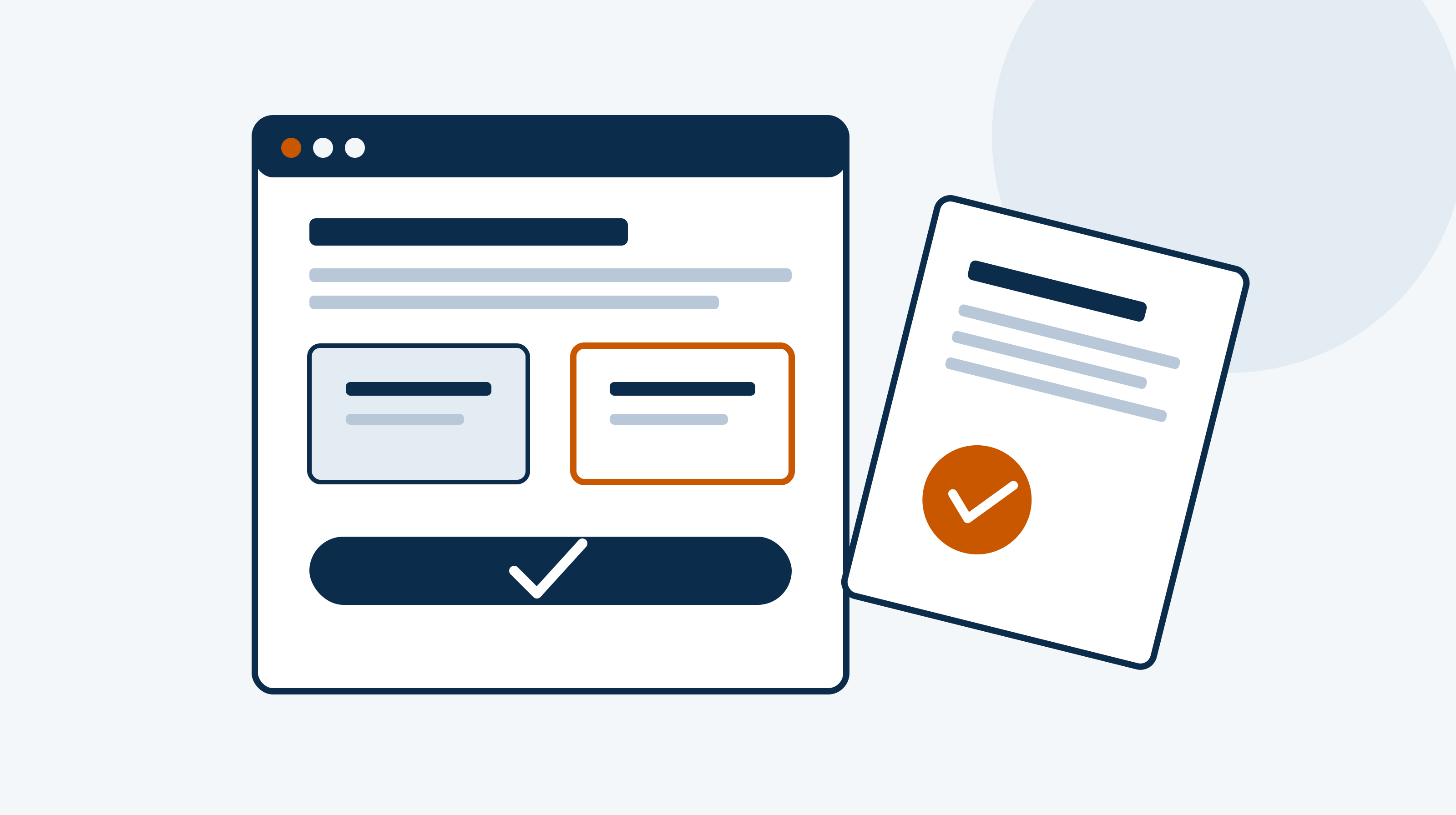
Most web design proposals lose for a dull reason: they are about the designer. Three paragraphs on your process, a gallery of past work, a price at the bottom, and no sign that you looked closely at this particular business. The owner reading it has to do all the work of connecting your service to their problem, and most will not bother.
This guide shows how to write a proposal that does that work for them. We cover the structure that works for small local-business projects, how to open with the prospect's own site problems, how to price with two options instead of one, the next-step line that gets a decision, and the follow-up sequence that rescues the deals that otherwise go quiet. If you are still working out your numbers first, read how much to charge for a website before you write a single line.
What a proposal is (and is not)
A proposal is a sales document, not a contract. Its job is to show a prospect that you understand their situation, propose a specific fix, and make saying yes easy. Guides from Hostinger, HubSpot and Webflow broadly agree on the standard sections: an introduction, an overview of the client's needs, the proposed solution, a schedule, pricing, terms, and a call to action. That list is a fine checklist. It just does not tell you where the persuasion happens, and for local small-business work it happens in two places: the problem section and the price section.
The contract comes after. Keep the legal detail out of the proposal beyond a short terms summary, and save the clause-by-clause material for your contract stage. Mixing them makes the proposal long and makes the client feel they are being asked to sign something before they have agreed to anything.
Before you write: the inputs you need
A proposal written from a vague conversation is a guess with a price on it. Collect these four things first, and write them down in one place:
The four inputs to gather first
- What the business wants: In their words: more calls, more bookings, a site they are not embarrassed by. Ask what a good result looks like in six months.
- What is wrong with the current site: Specific, checkable defects, such as a menu that does not open on a phone or a browser security warning. Not opinions.
- Who decides and who pays: Is the person you spoke to the owner? A proposal sent to someone who cannot say yes stalls.
- Constraints: A deadline tied to a season or an event, content they already have, a budget range if they will share one.
If you are meeting the prospect before quoting, a short, sales-side discovery call gets you these inputs quickly. If you came to them with an outreach email, you already hold the most valuable input: the site audit you used to start the conversation.
The structure that works for local small-business projects
Small-business owners are not procurement departments. They read on a phone, often between jobs, and they want to know four things: do you understand my problem, what exactly will I get, what does it cost, and what do I do next. Structure the proposal in that order and keep it to two to four pages.
Proposal sections, in reading order
- 1. Summary: Two or three sentences: who it is for, what you will do, what it should change for the business.
- 2. The problem, with evidence: Three to five findings from their actual site, each tied to a business consequence.
- 3. The solution: What you will build or fix, written as outcomes first and deliverables second.
- 4. Timeline: Phases with dates or week counts, including what you need from the client and when.
- 5. Two options and prices: A focused option and a fuller option, each with a clear scope and total.
- 6. Next step: One action, one date, one way to say yes.
1. The summary
Write this last but put it first. It should work if it is the only thing the owner reads: "We will rebuild Harbor Plumbing's website so it works on phones, shows your service area and lets customers request a quote in under a minute." Name the business, name the outcome, name the main deliverable. Leave out your agency's history.
2. The problem, in the prospect's own data
This is the section most proposals skip, and it is the one that wins deals. Instead of a generic "your website needs a refresh", list the specific findings you gathered: the page that takes too long to load on a phone, the contact form that does not submit, the footer still showing an old copyright year, the missing security certificate. Each finding gets one line on what it is and one line on what it likely costs them, such as a visitor who leaves instead of calling.
Be careful with the second half of that sentence. Say what is plausible ("visitors who hit a security warning often leave") and do not invent numbers about lost revenue. You can describe consequences without fabricating statistics, and owners trust a claim they can verify on their own phone more than a figure they cannot. Our guide to website audits that win web design clients covers how to gather findings that hold up.
This is where a scan helps. Leaddly's lead scanning and website audits record the missing or outdated elements of a prospect's site when you find the lead, so the problem section can quote real findings rather than memory. You can do the same by hand with a phone and ten minutes; the point is that the findings are specific and recorded.
3. The solution, outcomes before deliverables
Describe what changes for the business first, and what you will deliver second. "Customers can request a quote from any page, and you get an email each time" beats "a six-page responsive website with a contact form", although you should include both. Pair each problem from section 2 with the thing that fixes it. That one-to-one mapping is what makes the document feel written for them, and it also keeps your scope honest: anything not tied to a problem is a candidate to cut.
Spell out what is included and what is not. Number of pages, rounds of revisions, who writes the copy, who supplies photos, whether hosting is covered. Vague scope is how small projects turn into unpaid ones, and the same lines will carry forward into your contract.
4. Timeline and what you need from them
Give phases and week counts, not a single launch date. Then list what you need from the client and by when: logo files, photos, service descriptions, access to the domain. Content arriving late is a common reason small projects slip, so name it in the proposal. A short line such as "launch dates assume content is received by the end of week one" is enough to set expectations.
The two-option close
Present two priced options rather than one. A single price invites a yes-or-no decision, and "no" is the easy answer. Two options change the question from "should I hire this person?" to "which version do I want?" That shift is the reason many freelancers use tiered or good-better pricing, and it also gives anxious buyers a cheaper way in without you discounting your work.
A focused option versus a complete option
| Focused | Complete | |
|---|---|---|
| Fixes the problems found in the audit | ✓ | ✓ |
| Mobile-friendly, secure, fast | ✓ | ✓ |
| Contact form and click-to-call | ✓ | ✓ |
| Copywriting and photo sourcing | ✗ | ✓ |
| Local search setup and business listing review | ✗ | ✓ |
| Training session and launch support | ✗ | ✓ |
| Lower price, shorter timeline | ✓ | ✗ |
Rules that keep the two-option close honest:
Make the difference about scope, never quality. The focused option should still be work you are proud of. Drop deliverables, not standards.
Anchor with the findings. Both options should solve the audit problems. The complete option adds things like copy and local search setup on top. That way the cheaper option is not a trap and the pricier one is not a bundle of filler.
Show totals, not hourly breakdowns. A line-item table is fine for transparency, but the headline is one price per option. If you track real hours on past projects, you will know what each option actually costs you; our pricing guide walks through how to set the numbers.
Recommend one. Label the option you suggest and give one sentence on why. Owners often want someone to tell them which to pick.
Pricing for recurring work is its own conversation. If you plan to offer hosting, updates or monitoring after launch, mention it as an optional add-on in the proposal and point to the details in website maintenance plans.
Terms: keep them short and real
A proposal should state the payment structure, such as a deposit to start and the balance at launch, the revision limit, ownership (typically transferring to the client on final payment), and how long the quote is valid. Four or five lines, plain language. Anything longer belongs in the contract. Stating the deposit in the proposal means it is no surprise at signing, which removes one of the common points where deals stall.
The call to action
End with one next step. "To start, reply 'Option 2' and I will send the agreement and deposit invoice today. This quote is valid until Friday the 12th." That sentence names the action, the channel and a date. Avoid closings like "let me know your thoughts", which hand the owner an open-ended task they will postpone.
A reasonable expiry date is not a pressure tactic if it is real: your calendar has limited slots, and quotes based on today's scope should not live forever. Do not invent urgency you cannot honor.
Send it properly
How you deliver the proposal matters as much as what is in it.
Walk through it live if you can. A ten-minute call or video to talk through the findings and options usually beats an email attachment. If the owner objects, you hear it immediately. The scripts in how to sell a website to a small business owner cover the common objections.
Send a link or a PDF, not a tool login. Anything that requires an account to view is friction. Make sure it reads well on a phone.
Put the key sentence in the email body. The email should state the outcome, the two prices and the deadline, so the owner can decide without opening the attachment if they trust you.
When you do write the proposal for a prospect you found through outreach, an AI draft can save the typing but not the judgment. Leaddly's AI proposals build a first draft from the lead's audit findings and your saved templates; you still review it, set the options and price it before it goes out. That keeps the problem section tied to real findings instead of generic filler.
The follow-up sequence (where most deals die)
A proposal that gets no answer is not a no. It usually means the owner got busy, is unsure, or is waiting for a reminder. Most freelancers send one nudge, or none. A short, calm sequence recovers more than you might expect, and each message should add something rather than just ask for an answer.
A follow-up sequence after sending
- Day 0: send, with the one-line summary: Email the proposal with the outcome, two prices and your deadline in the body. Offer a call.
- Day 2: confirm it arrived: A two-line message: did the attachment open, and is there anything unclear in the options?
- Day 5: answer the likely question: Send a short note addressing the most common hesitation, such as timing, price or what happens after launch.
- Day 9: a lighter option: If price is the blocker, offer to trim scope to the focused option rather than lowering your rate.
- Day 14: a polite close: Say you will hold the quote until its expiry date and then step back. Leave the door open.
Notice what is missing: "just checking in." Every follow-up should carry a reason to reply. If a prospect goes silent after the final note, record the date and revisit them in a few months; local businesses often come back when a season, a bad review or a competitor's new site changes their priorities. Keeping proposal dates, notes and next follow-ups on the client record is what stops these from slipping. In Leaddly that lives in the client CRM, and the same record carries forward to the contract and invoices if the answer is yes.
A worked example (illustrative)
The numbers here are made up to show the shape, not to suggest what you should charge. Say you scanned a local plumber and found: the site fails to open its menu on a phone, the contact form does not send, and the footer says 2017. Your proposal summary says you will rebuild the site so it works on phones and lets customers request a quote easily.
Option A, the focused rebuild, covers a mobile-friendly site of up to five pages, a working quote form and click-to-call, with the client supplying content. Option B adds copywriting, photo sourcing, a local search setup and a launch walkthrough. Option B is labelled recommended because the owner has said they have no time to write copy. Terms: a deposit to start, the balance at launch, two revision rounds, ownership transfers on final payment. The close reads: "Reply 'A' or 'B' by Friday and I will send the agreement."
Notice that nothing in that example depends on design vocabulary. It is about phones, forms and what the owner needs to do next.
Common mistakes to avoid
Leading with your portfolio. Proof helps, but it belongs after the problem and solution, not before. A short link or two is enough.
Describing design instead of results. Owners rarely care about grids and typefaces. They care about calls, bookings and not looking out of date.
Pricing in a single number. One price makes the decision binary. Two options give them a choice.
Leaving scope vague. "A professional website" invites scope creep. Pages, revisions and responsibilities, in writing.
Discounting when the owner hesitates. Trim scope instead. A lower price for the same work teaches the client that your first price was negotiable.
Sending and waiting. Without a follow-up sequence, many proposals simply expire. Put the dates in your calendar when you send.
Frequently Asked Questions
How long should a web design proposal be?
For small local-business projects, two to four pages is usually enough: a short summary, the problems found, your solution, a timeline, two priced options, brief terms and a next step. Longer proposals tend to bury the decision.
Should I charge for writing a proposal?
For typical small projects, most freelancers treat the proposal as part of selling and do not charge. If a proposal requires significant research or a custom scope for a large client, you can charge a paid discovery or planning fee, stated up front.
Should I include a price range or exact prices?
Give exact prices for defined scopes. Ranges invite the client to assume the lower number. Two options with firm totals are clearer and easier to say yes to.
How many follow-ups should I send after a proposal?
A sequence of about four short messages over two weeks is reasonable: confirm receipt, answer a likely objection, offer a lighter scope, then close politely. Each should add something new, not just ask for a reply.
What is the difference between a proposal and a contract?
A proposal recommends a solution and a price. A contract is the signed legal agreement on scope, payment and responsibilities. Send the proposal first, then a contract with a deposit once the client agrees.