Where Web Design Clients Actually Come From (7 Real Sources)

Most web designers waste months chasing tactics before they answer the only question that decides whether any tactic works:
Where are the buyers already sitting?
This guide maps the terrain: real sources of clients (and what’s mostly noise). It focuses on where clients exist, not how to contact them.
Most marketing advice fails because it skips the map and jumps straight to tactics. Once you can point to where buyers already exist, almost any outreach method becomes a secondary decision.
Companion guide: https://leaddly.com/guides/finding-local-web-design-clients
---
Most marketing advice fails because it skips the map and jumps straight to tactics.
Key Question: Where Do Clients Already Exist?
Most freelancers get stuck because they pick a channel first (post more, DM more, do SEO) and only later ask whether that channel contains buyers.
Flip the order: start by locating places where businesses already feel pain, already compare themselves to competitors, and already spend money to fix problems.
Most advice mixes up where clients exist with how to contact them. This section is the filter.
Most advice mixes up where clients exist with how to contact them. This section is the filter.

3 Filters to Identify Client-Generating Sources
Use these filters to separate real demand from busywork. A “source” is only real if it reliably contains businesses with an active problem, a reachable decision-maker, and evidence they’ve paid for solutions before.
If it fails any of the three, you’ll feel productive while your pipeline stays empty.
- The pain is ongoing\
If the business loses leads every week because their site is slow, outdated, or invisible, they feel it constantly.
- A decision-maker is close to the problem\
If the owner or manager sees the damage firsthand (missed calls, low bookings, weak rankings), decisions happen faster.
- They’ve already spent before\
Businesses that have paid for a website, ads, branding, or tools have proven budget tolerance.
---
A “source” is only real if it reliably contains businesses with an active problem, a reachable decision-maker, and evidence they’ve paid for solutions before.
Source #1: Local Businesses as Client Sources
Local demand is durable because it’s tied to revenue, not trends. When the phone stops ringing or bookings slow down, owners do not care about marketing theory.
They care about fixing the leak.
Local businesses are reliable because their website is tied to money: calls, bookings, quotes, walk-ins.
Local demand is durable because it’s tied to revenue, not trends.
Why Local Businesses Generate Clients
Maps compresses the market into one screen: who shows up, who looks trustworthy, who gets chosen. Owners don’t need to ‘learn marketing’ to understand they’re losing if competitors dominate the map pack. That’s why it consistently produces buyers.
Local businesses compete in public, so the gap between “us” and “them” is obvious. That visibility turns website issues into business issues.
It also means even small improvements can feel meaningful when leads and calls are the scoreboard.
- They compete in public (Maps, reviews, rankings)
- Small improvements matter
- Owners feel lead swings directly
Local Categories That Drive Urgent Client Needs
These niches tend to have higher customer value, repeat business, or intense local competition, which creates budget. When one new customer is worth hundreds or thousands, owners pay attention to anything that affects conversion, trust, or visibility.
- Home services (plumbers, HVAC, roofers, electricians)
- Medical and dental
- Legal
- Specialty contractors (fencing, pools, remodeling)
- Appointment-based services (med spas, PT, auto detailing)
Defining Qualified Leads for Local Businesses
You’re not looking for ‘any local business.’ You’re looking for businesses where the website is part of the sales engine, even if it’s currently underperforming. Reviews, competitors outranking them, and any history of advertising are all strong indicators they’ll spend to improve results.
- They have reviews
- They have a website, but it’s weak/outdated
- Their competitors look stronger online
- They run any kind of marketing now or historically
Once you understand how local demand concentrates, the next source is even simpler: businesses that already paid for a website once.
---
Source #2: Existing Websites as Client Sources
\--- SECTION 8: "Source #2: Existing Websites as Client Sources" ---
An existing website is proof a business already crossed the hardest hurdle: agreeing that websites are worth paying for. That changes everything, because you’re no longer selling the concept.
You’re simply arriving at the right moment in their upgrade cycle.
The best clients already paid for a website before.
The hardest sale is “we should spend on web.” They already did. For insights on how to conduct effective evaluations, check out website audits that convert local clients.
Checklist for Identifying Client-Generating Sources
- Ongoing Pain: Businesses that feel ongoing pain from issues.
- Reachable Decision-Maker: Close decision-makers who can act quickly.
- Previous Spending Evidence: Businesses that have previously invested in solutions.
An existing website is proof a business already crossed the hardest hurdle: agreeing that websites are worth paying for.
Why Existing Websites Attract Clients
An existing site is proof of:
- past budget allocation
- baseline belief in web credibility
- accumulated web frustration (which creates buying moments)
Understanding the Website Upgrade Cycle
Websites age even when businesses don’t notice day-to-day. Over time, the site stops matching their current offers, their competitors raise expectations, and mobile usability becomes a silent dealbreaker. Eventually, “good enough” becomes “we need to fix this.”
- 2–5 year redesign window
- platform/provider changes
- new services/offers
- performance issues
- trust decay
Signals Indicating an Upgrade Moment
These signals matter because they point to timing. A business can tolerate an outdated site for years, until the mismatch becomes costly or embarrassing. When you see multiple signals stacking up, you’re looking at a buyer, not just a bad website.
- outdated design patterns
- broken mobile UX
- slow/glitchy pages
- stale credibility signals (old photos, old dates, old testimonials)
- mismatch between business reality and website presentation
If an existing site proves a business will spend, Google Maps shows you where that pressure is most visible.
---
Source #3: Google Maps Listings for Visible Demand
Google Maps is where local businesses feel competition in real time. It forces side-by-side comparison, and that comparison creates urgency. The moment a business believes visibility equals calls, Maps becomes a pressure cooker.

Maps is a public leaderboard. It creates constant comparison and pressure.
Why Google Maps Listings Generate Clients
- Winners are visible
- The gap feels unfair
- Visibility ties directly to calls and bookings
Understanding the Two Buyer Types
1) “We rank, but our site is trash.” 2) “We have reviews, but we’re invisible.”
What Sets Google Maps Leads Apart
Maps demand is high-intent and local, which makes it easier to connect visibility to revenue. Reviews, photos, categories, and proximity do a lot of pre-selling before the website is even clicked.
That’s also why weak websites hurt more when Maps is sending traffic.
- Local competition is obvious
- Trust signals are built in (reviews, photos, categories)
- Owners pay attention because it feels real-time
Maps reveals who’s competing right now. Next are the industries where web work repeats, even when competition is quieter.
---
Source #4: Recurring-Need Industries for Ongoing Clients
Some businesses treat a website like a brochure. Others treat it like infrastructure. In recurring-need industries, the website has to evolve with the business, which means updates, pages, and improvements keep coming back around.
Some businesses buy once. Others are forced into constant updates because their business changes regularly. Those produce repeat buyers.
Recurring-Need vs. One-Time Purchase Industries
| Recurring-Need Industries | One-Time Purchase Industries | |
|---|---|---|
| Website as Infrastructure | ✓ | ✗ |
| Regular Updates Required | ✓ | ✗ |
| Higher Client Retention | ✓ | ✗ |
Recurring Triggers for Ongoing Web Work
These triggers are important because they don’t rely on motivation. They’re operational events that force decisions: new locations, new services, new staff, new promotions. When the business changes, the website has to catch up or it starts costing money.
- new locations
- new services/specializations
- staff changes
- seasonal campaigns
- reputation cycles
- compliance/policy updates
Industries That Generate Ongoing Web Work
Owners in these niches feel website changes as a direct lever on bookings, trust, and revenue, so updates don’t stay optional for long.
- multi-location service businesses
- clinics and practices
- firms with rotating offers
- scaling home service brands
- any niche with aggressive online competitors
Recurring-need industries create repeat work. Transitions create sudden work. Different trigger, same outcome: a buyer appears.
---
Source #5: Businesses in Transition as Client Goldmines
Transitions create buying moments because they create unfinished public-facing work. New ownership, rebrands, expansions, and competitive shocks all force the same question: “Does our website reflect who we are right now?”
When the answer is no, a project appears.
Transitions force website decisions.
The site becomes a loose end that must be tied up.
Decision Tree for Identifying Transition Opportunities
Is the business undergoing a transition?
Yes → Focus on rebranding or expansion opportunities.
No → Look for alternative sources of demand.
Common Business Transitions to Watch For
What makes transitions powerful is timing. The business is already changing, budgets are already being allocated, and the owner is already paying attention to perception.
The website becomes an obvious piece that needs to align with the new direction.
- new ownership/management
- rebrand/repositioning
- expansion
- growth spurt
- new serious competitor enters the market
Identifying Online Signs of Business Transitions
Transitions leave visible fingerprints because businesses update the easiest surfaces first: listings, socials, photos, hours.

When those surfaces look modern but the website looks frozen in time, you’re looking at a mismatch that businesses naturally want to resolve.
- brand inconsistency (new logo on socials, old logo on site)
- sudden review velocity changes
- new address/hours/categories
- new photos that don’t match the site
- active social presence, frozen website
When change is happening, the website becomes urgent. When things are outright broken, urgency becomes immediate.
---
Source #6: Businesses with Broken Online Presence
Broken beats outdated. When a website is actively failing, the business feels it in lost leads and damaged trust. These are the buyers who don’t need persuasion, because the cost of doing nothing is already showing up.
Outdated is optional. Broken is expensive. Broken presence creates immediate pain and fast decisions.
Checklist for Identifying Broken Online Presence
- SSL Warnings: Indicates security issues.
- Broken Mobile Navigation: Affects user experience.
- 404 Errors: Leads to lost potential clients.
Broken beats outdated. When a website is actively failing, the business feels it in lost leads and damaged trust.
Checklist for Identifying Broken Online Presence
These aren’t aesthetic issues, they’re trust and conversion issues. A broken site makes customers hesitate, bounce, or assume the business is unreliable. That’s why fixing ‘broken’ often gets prioritized even when budgets are tight.
- SSL warnings / “Not secure”
- domain/hosting issues
- mobile navigation doesn’t work
- unreadable text on phones
- missing assets / broken images
- dead pages and 404s
- unclear next step (no obvious action)
Why Broken Presence Clients Act Quickly
Broken presence creates immediate pain and public embarrassment, which shortens decision cycles. There’s also a clear before/after: owners can understand ‘fixed’ without needing a marketing education. That clarity makes action easier.

- cost of doing nothing is obvious
- fixes are concrete
- reputation damage is public
Broken sites create fast decisions. Competitor pressure creates ongoing decisions, which brings us to the final source.
---
Source #7: Competitor-Pressure Markets for Client Acquisition
In some niches, competition sets the price of entry. One strong competitor raises expectations for everyone, and everyone else has to respond. That’s how a market turns websites from optional to defensive spending.
Competition creates budget.
Fear of losing is the most reliable motivator in business.
Client Acquisition Sources: Reliable vs. Unreliable
| Reliable Sources | Unreliable Sources | |
|---|---|---|
| Existing Websites | ✓ | ✗ |
| Referrals | ✗ | ✓ |
| Competitor Pressure | ✓ | ✗ |
Understanding Competitor Pressure in Markets
In these markets, owners don’t need a marketing pep talk. They can see they’re losing ground.
- ads everywhere
- review volume is high and recent
- top players look polished
- visible differentiation (specializations, guarantees, promos)
- ranking battles are obvious
Why Competitor Pressure Creates Repeat Demand
Competitor-pressure markets don’t calm down after one redesign. Competitors copy improvements quickly, new offers rotate, and customer expectations rise. That creates ongoing website work instead of one-and-done projects.
- competitors copy fast
- expectations rise yearly
- new offers require new pages and updates
---
Myth List: 5 Client Sources That Waste Time
These aren’t “bad” activities. They’re just unreliable as early client sources because they rarely contain buyers by default. If you treat them like primary pipeline, you end up doing lots of work that looks like marketing while producing little revenue.
These often fail early because they don’t pass the buyer filters.
These aren’t “bad” activities. They’re just unreliable as early client sources because they rarely contain buyers by default.
Myth #1: Social Posting as a Client Source
Early on, social is usually low-intent and low-distribution. You can do everything ‘right’ and still reach mostly peers, not buyers. That’s why it’s better treated as a long-term asset, not a short-term client source.
\- tiny distribution
\- low intent
\- slow compounding
Social media platforms are great for visibility and engagement, but they rarely house decision-makers actively searching for web design services.
Posts get lost in endless feeds, reducing the chances that your message will land in front of potential clients ready to buy.
Buyers don't scroll through posts to find designers. They actively seek solutions to their business challenges.
Some web designers have found success by treating their social media presence not as a direct client-acquisition channel, but as a long-term brand-building strategy. They leverage it to develop recognition and trust over time.
Myth #2: Waiting for Clients to Discover You
Relying on referrals is like playing the lottery.
Sure, they might bring in clients occasionally. But treating them as a primary pipeline for acquiring web design clients is deeply unreliable.
Referrals can feel like a safety net. After all, you're relying on word-of-mouth from satisfied clients or professional acquaintances.
Referrals are influenced by factors outside your control, such as the timing of your client's social activities and how actively they promote your services. Plus, they're typically not aligned with urgent business needs.
Waiting to be discovered through referrals ignores the proactive activities that actually build pipelines.
Checklist for Optimizing Referral Strategies
- Build a Strong Network: Focus on quality connections.
- Follow Up Regularly: Stay top of mind with past clients.
- Request Specific Referrals: Ask for targeted introductions.
Web designers need consistency, and this is where referrals fall short. They don't control volume, client quality, or the timing of when a prospect might need your services.
Consider this:
- Capacity Fluctuations: Depending solely on when and if someone remembers you can lead to feast or famine cycles.
- Qualitative Variability: Not all referrals match your target client profile, leading to potential scope misalignment or budget mismatches.
- Market Changes: You have little control over how market dynamics can affect referral rates, like economic shifts that impact client spend.
You're not waiting to be discovered. You're actively creating opportunities. And that's the point.
For more insights, check out Leaddly's guide on finding local web design clients.
Myth #3: Ineffective Networking Without a System
Most web designers believe networking events and mixers automatically lead to client connections.
They don't.
Without a structured approach, networking becomes a time sink rather than a gateway to new projects. Random conversations and exchanging business cards do little unless you can directly target individuals who have decision-making power and a budget.
Here's what matters:
Proximity to the decision-maker.
Random networking doesn't convert.
Strategic networking with a system does.
To transform networking into a reliable client source, follow this three-step system:
- Identify the Right Events: Look for industry-specific gatherings where decision-makers are likely to be present. Ignore generic business mixers in favor of niche conferences.
- Prepare a Clear Offer: Bring a concise pitch about how your services solve pressing web issues. Highlight pain points like slow load times affecting revenue.
A freelance web designer used this system and saw a 30% increase in conversion rate from networking events within six months. Systematic follow-ups helped nurture leads that would've otherwise disappeared.
Myth #4: Marketplaces That Undermine Your Value
Many web designers see third-party marketplaces like Fiverr as a goldmine for clients. You sign up, list your services, and wait for projects. Sounds straightforward, right?
Here's where it breaks down:
These platforms race to the bottom on price. Designers compete aggressively, often undercutting their own rates just to get noticed. It's not just about lower rates, though. The real issue on these platforms? Value perception.
While you might get projects, they're rarely the high-value, long-term clients that fuel sustainable growth.
Why does this happen?
- Budget Constraints: Many clients turn to marketplaces like Fiverr with tight budgets. They're often looking for the cheapest option—meaning any negotiation centers on lowering your fee, not valuing your expertise.
- Project Consistency: Marketplaces provide erratic opportunities. One month, you might have a handful of short gigs. Next month, nothing. This inconsistency makes planning and stability nearly impossible.
- Limited Client Engagement: Transactions on these platforms can feel transactional. Clients often choose services based on price and deliverables listed. Personal rapport and building relationships? Those fall to the wayside.
And that's the point.
Value perception is key. When you're competing on cost, clients perceive your services as commodities, not strategic partnerships.
To grow sustainably, it's crucial to prioritize sources that recognize the full scope of your capabilities.
Shifting away from marketplaces in favor of building direct client relationships can lead not only to higher fees but also to clients who understand and value your expertise.
Markets where you're seen as a necessary partner—not just a service provider—are where you'll thrive.
Consider alternatives like personal networking events, specialized agencies, or industry-specific directories for direct client acquisition.
Myth #5: Cold Traffic Without Proper Positioning
When web designers hear “cold traffic,” they often think of potential clients pouring in automatically.
More eyes on your messages won't fix unclear positioning.
If prospects can’t quickly grasp who you help and why you’re distinct, you have more people ignoring you.
Cold outreach has its place, but relying solely on it without proper positioning is like shouting in a noisy room.
How do you fix this?
- Identify Your Unique Value: What do you do best that others don't? It could be as specific as designing for the healthcare sector or creating immersive e-commerce experiences.
- Craft Clear Messaging: Use straightforward language that resonates with your target audience. Avoid jargon and focus on explaining how you solve their specific problems.
- Showcase Credibility: Display testimonials, case studies, and examples of past work prominently. This builds trust and provides potential clients with evidence of your results.
Cold traffic can only convert if your positioning is crystal clear.
Without it, even the most aggressive marketing campaigns fall flat.
Practical Takeaway: Choose 1-2 Client Sources to Focus On
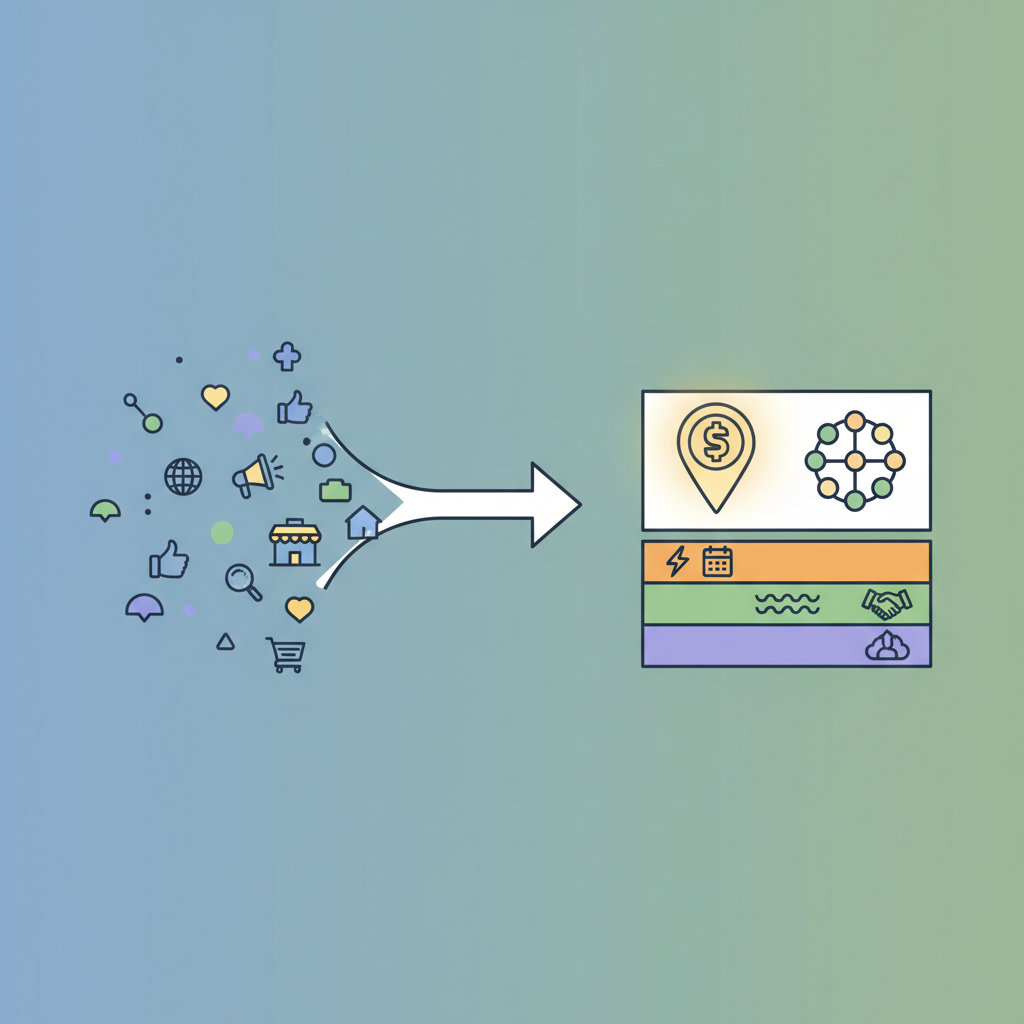
You don’t need more channels, you need fewer decisions. Pick one or two sources where buyers already exist, then learn the patterns inside them. That’s how you get out of the loop of constantly switching strategies.
If you’re choosing where to focus, use this simple rule:
- Need clients in 30–60 days: existing websites, Maps listings, broken presence, competitor-pressure markets
- Want steadier repeat work: recurring-need industries + competitor-pressure markets
- Building long-term inbound: add content/audience after pipeline is stable
You don’t need more channels, you need fewer decisions. Pick one or two sources where buyers already exist, then learn the patterns inside them.
Choose Based on Your Client Acquisition Speed Needs
If you need clients in 30–60 days, prioritize visible demand pools:
- existing websites
- Maps listings
- broken presence
- competitor-pressure markets
Prioritize Depth Over Variety in Client Sources
Momentum comes from learning patterns inside one or two sources, not dabbling in five.
Transform Chaos into a Clear Client Acquisition Map
If you want the practical companion that helps turn local demand into a workable pool: https://leaddly.com/guides/finding-local-web-design-clients
If you want the practical companion that helps turn local demand into a workable pool: https://leaddly.com/guides/finding-local-web-design-clients
Final Checklist for Client Acquisition
- Focus on 1-2 Sources: Prioritize depth over variety.
- Analyze Patterns: Learn what works in chosen sources.
- Adapt Strategies as Needed: Be flexible and responsive.